The Foundation of Fitness: A Simple Weekly Framework for General Physical Preparedness (GPP)
In the fitness world, we often get caught up in specialized goals—training for a marathon, hitting a specific powerlifting total, or mastering a yoga pose. But for most of us, the real goal is General Physical Preparedness (GPP).
GPP is about building a body that is capable of handling whatever life throws at it, whether that’s carrying all the groceries in one trip, hiking a trail on the weekend, or staying injury-free as the years go by.
Here is a flexible, effective framework to help you build a well-rounded weekly training regimen, regardless of your current fitness level.
The Four Pillars of GPP
To be truly "prepared," your training should touch on four key areas. Think of these as the legs of a chair; if one is missing, the whole thing becomes unstable.
Strength: Building muscle and bone density through resistance.
Cardiovascular Health: Strengthening your heart and lungs (both aerobic and anaerobic).
Mobility & Flexibility: Ensuring your joints can move through their full range of motion.
Recovery: Allowing your body to adapt and grow stronger.
The "Balanced Week" Framework
This framework is modular. If you are a beginner, start with the lower end of the time ranges. If you are more advanced, increase the intensity or duration.
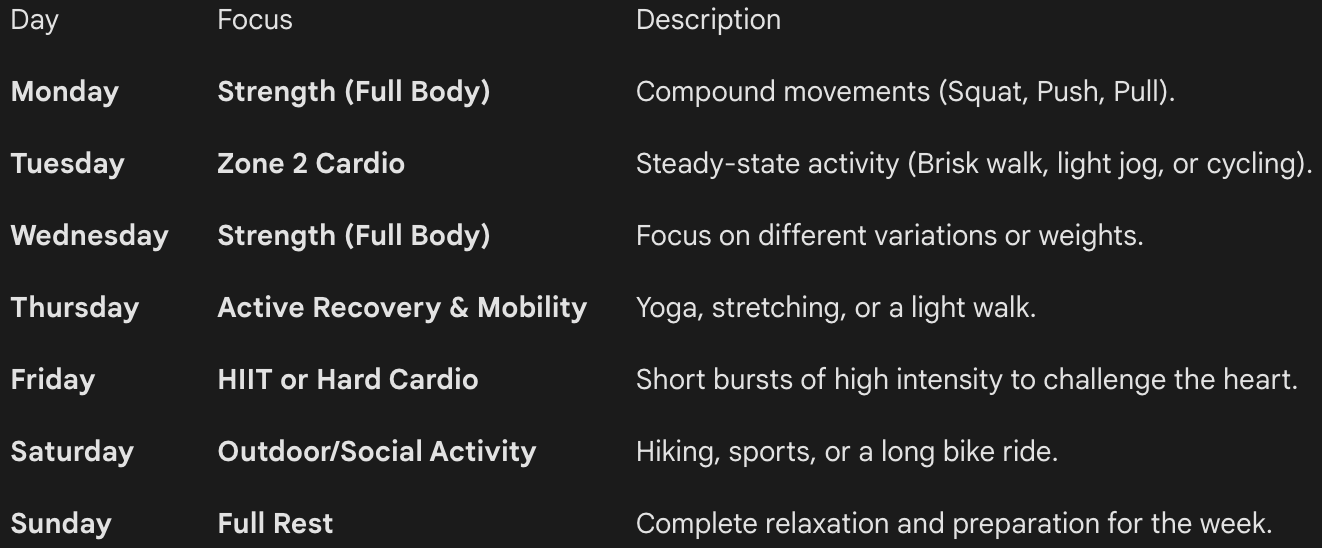
This is just a generalized recommendation of one way you could hit some of these goals
1. Resistance Training (2–3 Days)
Strength is the cornerstone of longevity. You don’t need a fancy gym; bodyweight exercises, kettlebells, or dumbbells all work. Focus on compound movements that use multiple joints:
Squat/Lunge: Leg strength.
Push: Push-ups or overhead presses.
Pull: Rows or pull-ups.
Hinge: Deadlifts or kettlebell swings (vital for back health).
2. Cardiovascular Conditioning (2–3 Days)
Divide your cardio into two types:
Zone 2 (Aerobic Base): This is "conversational" pace. You should be able to speak in full sentences. It builds endurance without overtaxing your nervous system.
High Intensity (Anaerobic): Once a week, get your heart rate up high for short intervals. This improves your "top speed" and metabolic health.
3. Mobility and Maintenance (Daily or Dedicated)
Mobility isn't just "stretching." It's about active control.
Pro Tip: Try to spend 10 minutes every evening on the floor. Move through some lunges, "world's greatest stretches," or cat-cow poses while watching TV. This undoes the damage of sitting at a desk all day.
How to Scale for Your Level
The Beginner: Focus on consistency over intensity. Your goal is simply to show up. If a 30-minute workout feels like too much, do 10 minutes. Use bodyweight versions of all strength moves.
The Intermediate: Start tracking your progress. Can you do one more rep than last week? Can you walk slightly faster during your Zone 2 sessions?
The Advanced: Focus on recovery and refinement. At this level, the risk of injury increases, so prioritize mobility and ensure your "hard" days are truly hard and your "easy" days are truly easy.
Final Thoughts
The best training program is the one you actually do. This GPP framework isn't a rigid set of rules—it's a map. If you miss a Wednesday, don't sweat it; just pick up where you left off. General physical preparedness is a marathon, not a sprint.